Timing & Seasons
Tall Fescue Sod in Oklahoma City: When to Lay It and How to Care for It
By Carlos Ochoa, Angel & Sons Sod Business · · Updated

When can you lay fescue sod in Oklahoma City?
From fall through spring. The sod window for tall fescue in Oklahoma is September through May, and for best results with cool-season grasses, we recommend seeding or sodding in the fall. The sod window for Bermuda and Zoysia is May through July, so you can still lay fescue sod in Oklahoma City after that window closes.
When is the best time to plant fescue in Oklahoma?
The best time to plant fescue in Oklahoma is fall. We recommend seeding or sodding tall fescue in the fall, because fall plantings of cool-season grasses do better than spring plantings: there is more time for the grass to develop before the heat and drought of summer. Fescue sod can still go down any time from September through May. That applies to sod too: a cool-season planting should have enough time to grow before hot, dry summer weather comes. Fescue laid in spring still works, but it has fewer months to settle in before summer heat. For Bermuda and Zoysia, see the best time to lay sod in Oklahoma.
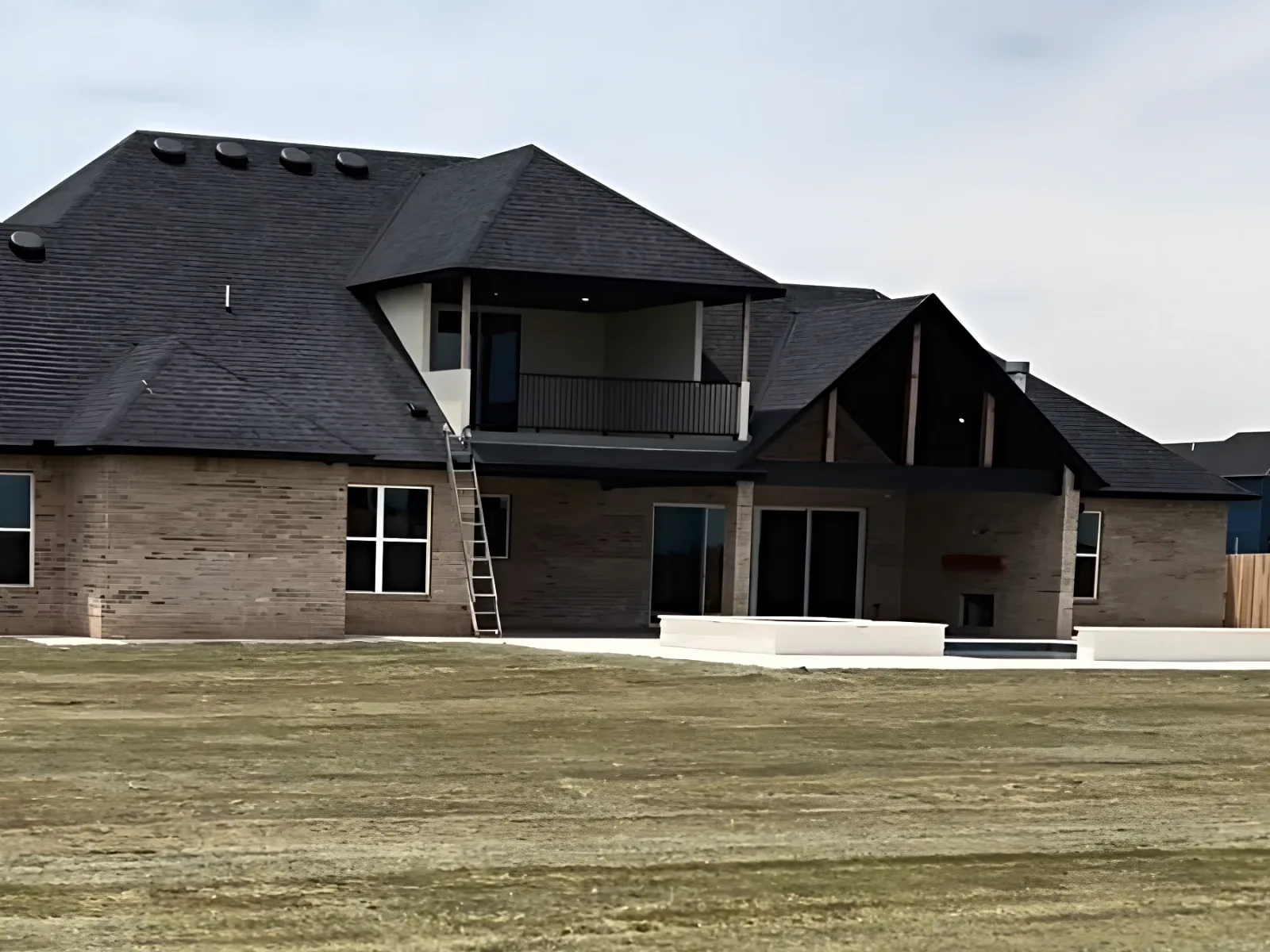
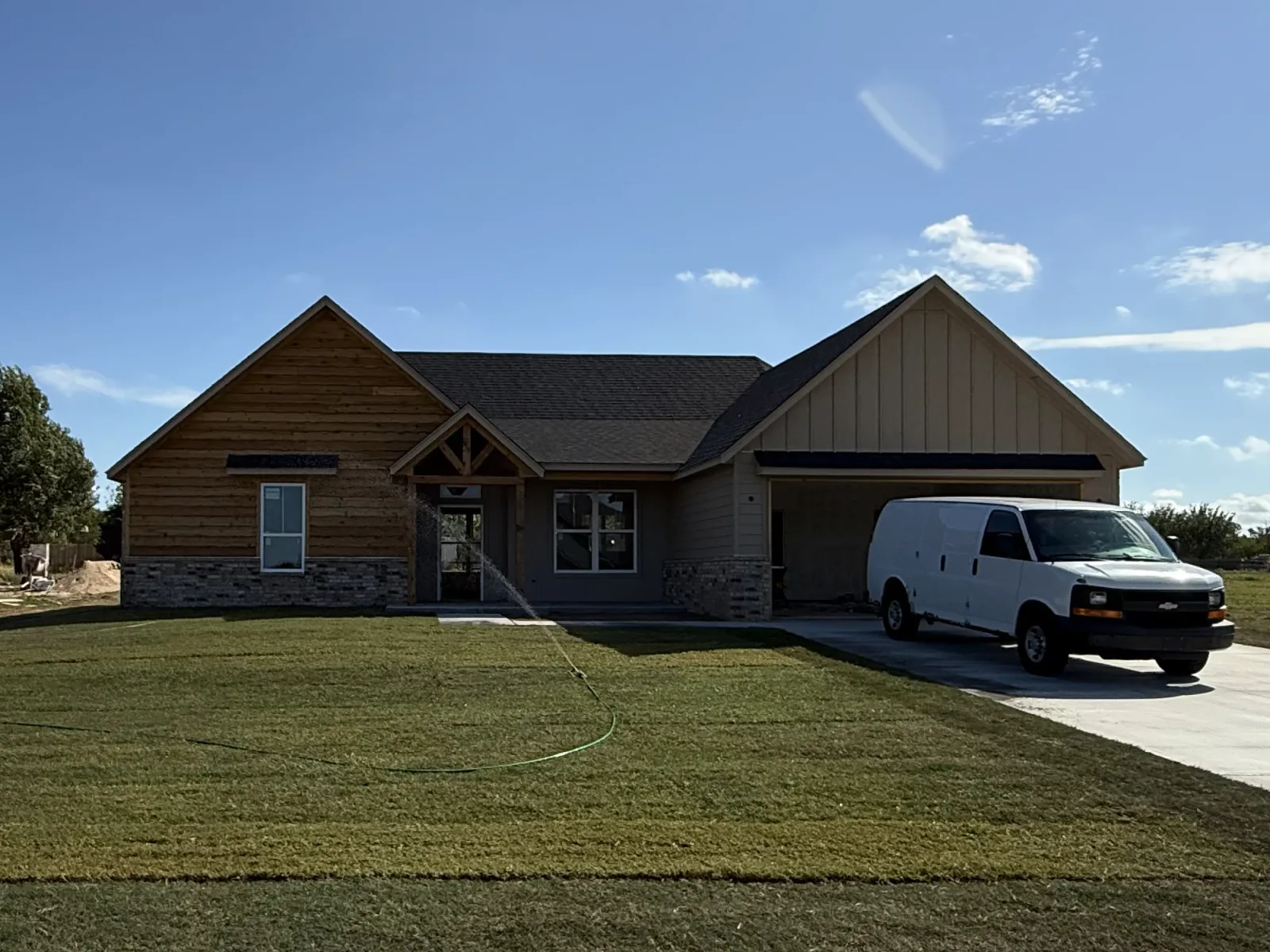
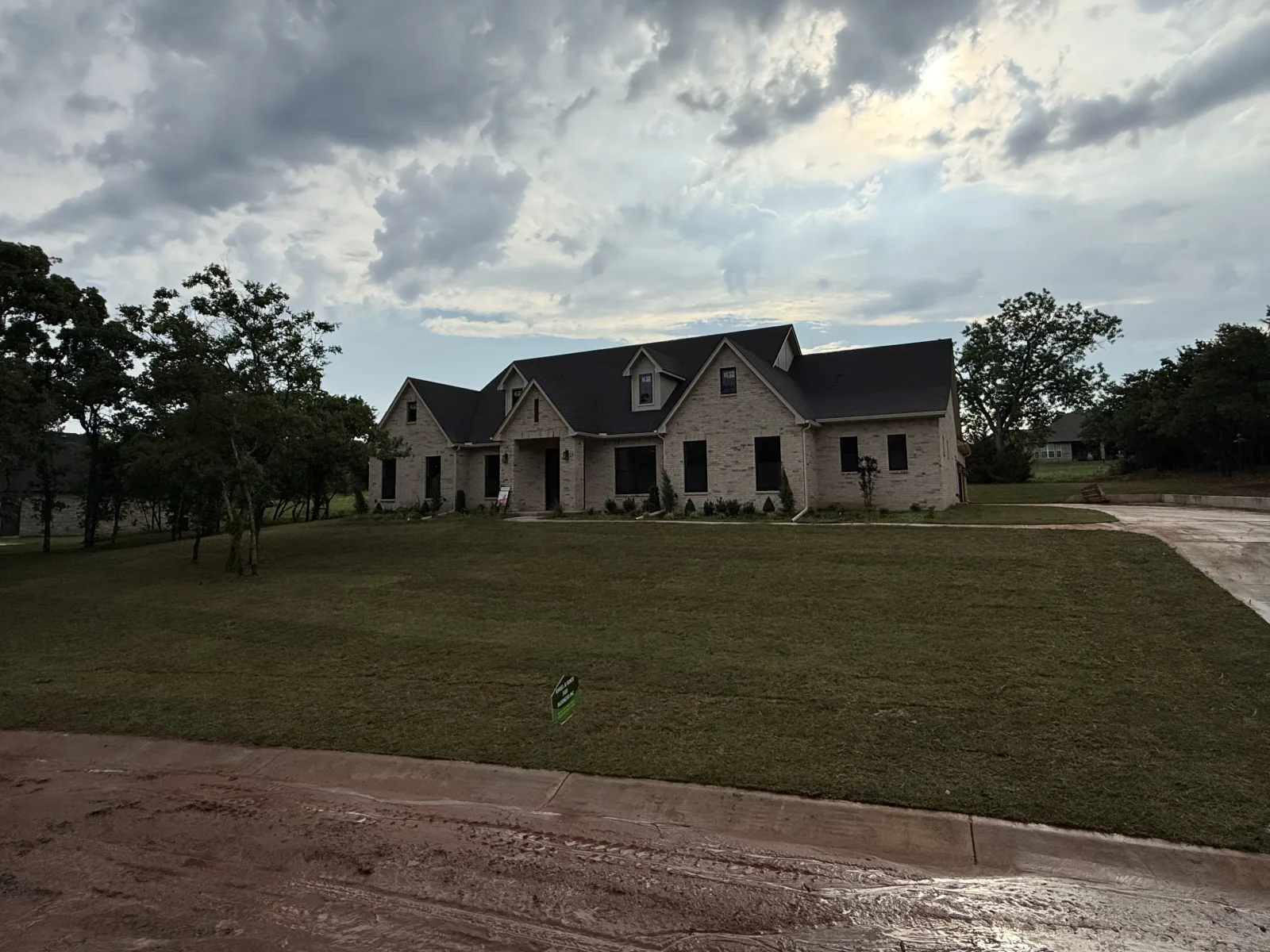
From our jobs

Is fescue sod a good choice in Oklahoma?
Fescue sod is the shade and winter-green choice for Oklahoma yards, and it trades that for more summer water. Tall fescue rates good in shade, where Bermuda rates poor, and it stays green all year when it's watered and fed. Here's how it compares with Bermuda:
| Feature | Tall fescue | Bermudagrass |
|---|---|---|
| Shade rating | Good | Poor |
| Green in winter | Yes, if watered and fed | No (goes dormant) |
| Summer water | More often than bermuda | Less |
| Sod window | Sept.–May | May–July |
The sun rule: with less than 6 hours of sun, tall fescue or plants other than grass may be the best option. In full sun, tall fescue needs more frequent summer watering than bermuda to prevent wilting and thinning, so we recommend it for full sun only where you have an easy way to water it. For more on shade, read What Grass Grows in Shade in Oklahoma? For sunny yards, read How Much Sun Does Fescue Need?
How high should you mow tall fescue?
Higher than bermuda. We recommend mowing tall fescue at 2.5 to 3 inches: 3 inches from May through August and 2.5 inches from September through April. In shade, raise it to at least 3 inches. Whatever the height, remove no more than one-third of the top growth at a time.
New sod gets its first mowing once it reaches that height. See When Can You Walk On and Mow New Sod in Oklahoma?
When should you fertilize tall fescue?
Mostly in fall. Cool-season grasses like tall fescue need most of their annual fertilizer in the fall, with small amounts in the spring and very little if any during the summer. We recommend up to 1 pound of nitrogen per 1,000 square feet in late February or early March, late April or very early May, late September, and mid to late November, and avoiding fertilizer from June through August.
For brand-new sod, we recommend a light nitrogen feeding three to four weeks after planting to help it establish.
What problems should you watch for with tall fescue?
Brown patch. Brown patch is a disease that commonly shows up on cool-season grasses, especially tall fescue. It usually appears in hot, humid weather when nights stay above 60°F and the grass stays wet for long periods, as brown patches up to three feet across. Our brown patch tips: go very light on nitrogen in late spring and summer, avoid watering in the late afternoon and evening, and water deeply and less often, at a time when the grass is likely to dry quickly.
Thin spots. Most tall fescues grow as individual bunch-type plants, with little ability to repair damaged turf on their own, unlike RTF. Fall is a great time to rejuvenate cool-season lawns by overseeding, and October is the best month to overseed tired cool-season lawns. For the steps, read When to Overseed Fescue in Oklahoma
Mixing with Bermuda. We don't recommend mixing cool-season and warm-season grasses in shady areas, because they have different care needs and growth patterns.
How do you water new fescue sod?
The same way as any new sod: water it right away, then every day for several weeks after planting. In Nebraska, sod laid in early fall needs less water than sod laid in summer. Read How to Water New Sod in Oklahoma: The First 30 Days. If you're on Oklahoma City water, make your water variance request before install.
What tall fescue do we install?
We install Black Beauty, Heartland Supreme, RTF, Revolution and a fescue blend. RTF is rhizomatous tall fescue, developed by Barenbrug: it produces true rhizomes that spread beneath the soil surface, so damaged and bare areas gradually fill in. See them all on our Sod Varieties page.
Thinking about fescue for a shady yard? Ask for a free yard visit and estimate on our Contact page, and we'll tell you what we'd put there and when.
Sources
- OSU Extension, Establishing a Lawn in Oklahoma (HLA-6419): https://extension.okstate.edu/fact-sheets/establishing-a-lawn-in-oklahoma.html
- OSU Extension, Selecting a Lawn Grass for Oklahoma (HLA-6418): https://extension.okstate.edu/fact-sheets/selecting-a-lawn-grass-for-oklahoma.html
- OSU Extension, Managing Turfgrass in the Shade in Oklahoma (HLA-6608): https://extension.okstate.edu/fact-sheets/managing-turfgrass-in-the-shade-in-oklahoma.html
- OSU Extension, Lawn Management in Oklahoma (HLA-6420): https://extension.okstate.edu/fact-sheets/lawn-management-in-oklahoma.html
- OSU Extension, Cool-Season Lawn Management Calendar (L-442): https://pods.okstate.edu/fact-sheets/L-442-Cool-Season-Lawn-Management-Calendar.pdf
- OSU Extension Horticulture Tips, Brown Patch Disease of Cool-Season Grasses (July 27, 2026): https://extension.okstate.edu/announcements/horticulture-tips/hort-tips-2026/brown-patch-disease-of-cool-season-grasses
- OSU Extension Grow column, A Greener Spring Lawn Means Overseeding This Fall (Oct. 5, 2025): https://extension.okstate.edu/announcements/grow-gardening-columns/2025/october-5-2025
- Barenbrug, What is RTF?: https://barusa.com/turf/technologies/what-rtf
- University of Nebraska–Lincoln, Establishing Lawns From Sod: https://hles.unl.edu/sites/unl.edu.ianr.extension.community-environment/files/media/file/Establishing-lawn-fromsod2012m.pdf
Frequently asked questions
- When can you lay fescue sod in Oklahoma?
- Fescue sod can go down in Oklahoma from September through May. That's the sod window for tall fescue, and cool-season grasses do best when seeded or sodded in the fall.
- Does tall fescue stay green in winter in Oklahoma?
- Yes, tall fescue stays green in winter with care: cool-season grasses like tall fescue provide a green cover the entire year if they are properly watered and fertilized.
- When is the best time to plant fescue in Oklahoma?
- Fall is the best time to plant fescue in Oklahoma. Fall plantings of cool-season grasses like tall fescue do better than spring plantings, because there is more time for the grass to develop before the heat and drought of summer.
- Is fescue sod a good choice in Oklahoma?
- Fescue sod is a good choice in Oklahoma for shady yards and for a lawn that stays green in winter. Tall fescue rates good in shade, where Bermuda rates poor, but in full sun it needs more frequent summer watering than Bermuda.
- How short should you mow tall fescue?
- We recommend 3 inches from May through August and 2.5 inches from September through April. In shade, mow tall fescue at least 3 inches high.
- Does tall fescue spread to fill bare spots?
- Not much, for most tall fescues: they grow as individual bunch-type plants with little ability to repair damaged turf on their own. RTF is an exception: it produces true rhizomes, so damaged and bare areas gradually fill in. For a tired fescue lawn, we recommend overseeding in the fall; October is the best month for it.
Real jobs
See our work
- Before and afterAll our projectsSee all projects